
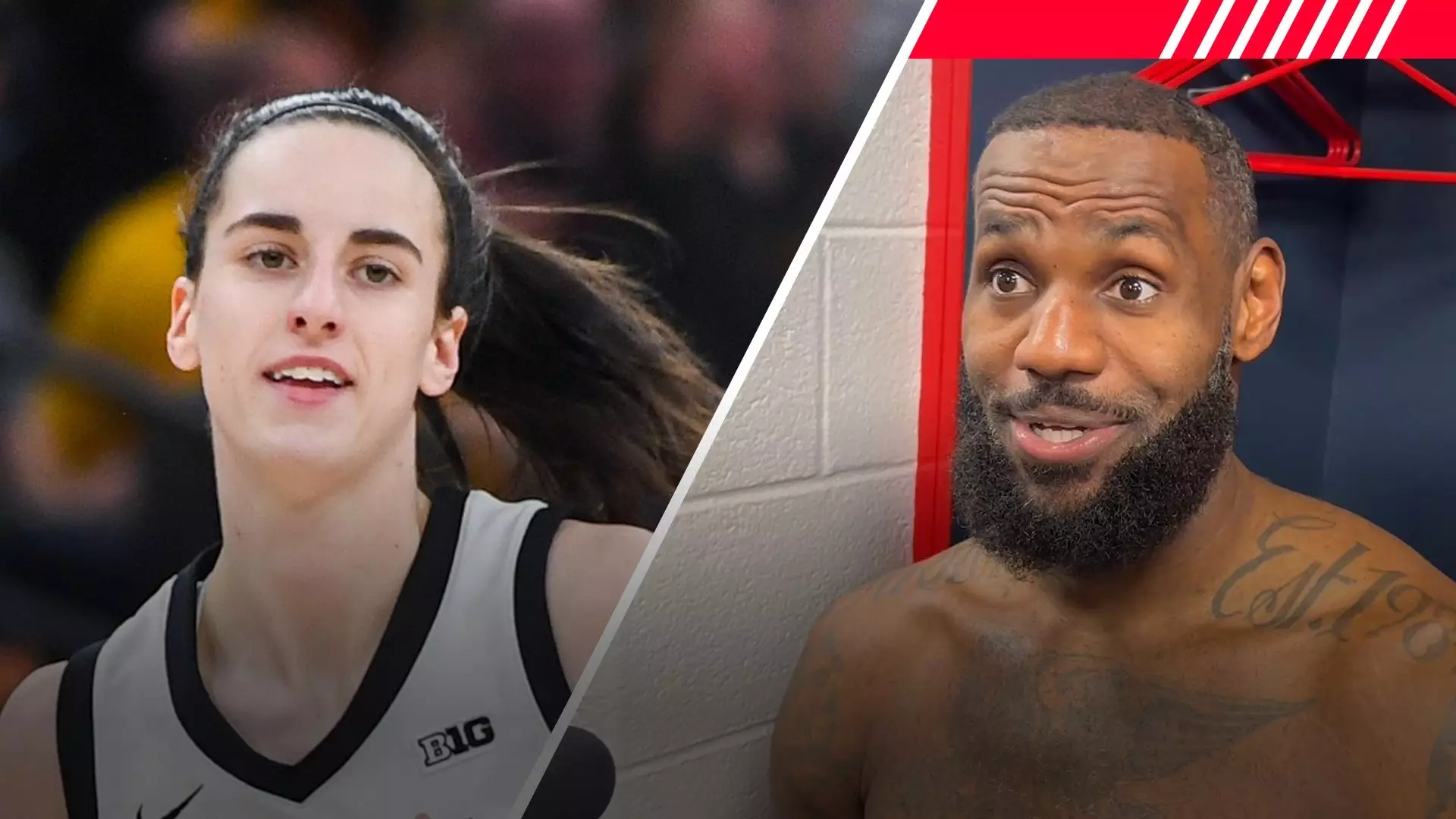
LeBron James recently shared his thoughts on the increasing popularity of the women’s NCAA tournament, highlighting the star power as a major driving force. According to James, the presence of iconic players like Angel Reese, JuJu Watkins, Caitlin Clark, Paige Bueckers, and others has contributed significantly to the rise in interest in women’s college hoops. He emphasized the talent and impact of these athletes as key factors in attracting viewers to the games.
The Elite Eight game between Caitlin Clark’s Iowa Hawkeyes and Angel Reese’s LSU Tigers drew an average of 12.3 million viewers, showcasing the growing appeal of women’s college basketball. James acknowledged the role of players in driving viewer engagement, noting that individual talents can influence the popularity of games. He also pointed out the difference in rules between men’s and women’s basketball, highlighting the limitations faced by female players in pursuing professional opportunities.
While recognizing the positive impact of heightened interest in the women’s NCAA tournament, James raised concerns about the potential trade-offs for female players. He mentioned JuJu Watkins as an example of a talented athlete who excelled in the tournament but faced restrictions on entering professional basketball. The disparity in rules between men’s and women’s basketball presents challenges for female players seeking to capitalize on their success in college.
James also discussed the benefits of mandatory college experience for players before entering the NBA or WNBA drafts. He highlighted the opportunity for athletes to build a legacy at their respective programs and emphasized the value of iconic moments in women’s college basketball. While acknowledging the advantages of extended college careers, James raised questions about the impact on individual players’ aspirations and the limitations they face in pursuing professional opportunities.
LeBron James’ comments shed light on the evolving landscape of women’s college basketball and the challenges faced by talented athletes in navigating their careers. The rise of star power in the women’s NCAA tournament has brought increased visibility to the sport, but questions remain about the implications for individual players and their future prospects. As the conversation continues, it is essential to consider the complexities of player representation, viewer engagement, and the opportunity for female athletes to thrive both on and off the court.
Leave a Reply